
The Grant County Route from Address to Owner
Answering who owns a Grant County property means building a short evidence trail. The county spreads its clues across several systems. The Assessor and GIS supply the parcel. The Recorder keeps the deed records, the Treasurer handles the tax roll, and the courts enter only when a case touches title. Hold onto one parcel number and legal description as the name moves between them.
- Search the physical address in Grant County Elevate and confirm Property Location and parcel shape.
- Record the APN and read the official Ownership category as the current county-roll lead.
- Search the latest conveyance in the Recorder's Tapestry index and identify its grantee.
- Compare the deed's legal description with the GIS parcel instead of matching on name alone.
- If an entity, estate, trust, or court order appears, follow the relevant official record before stating an owner.
This flow names the owner of record. Public records fix that name as of the search date. A taxpayer, occupant, permit applicant, contractor, or registered agent is never treated as the owner without deed evidence.
Where Grant County Property Ownership Appears
No single screen answers every ownership question. Elevate locates the parcel and supplies the assessment-roll lead. The Recorder preserves recorded transfers, and the Tax List shows account status, though its taxpayer or mailing address can differ from the name on title. Court records matter only when a judgment, probate order, foreclosure, or quiet-title case affects the chain.
| Official source | Ownership clue | Currency and access |
|---|---|---|
| Grant County Elevate | Ownership and Owner History categories tied to the parcel | Public GIS; sales updated weekly |
| Recorder Tapestry | Grantee on the newest recorded conveyance | Paid per search; document images viewable after search |
| Grant County Tax List | Taxpayer name, parcel, property number, and tax address | Public form; current year is the best status |
| Indiana MyCase and Grant Clerk | Party, docket, order, or judgment when a case affects title | Public portal where permitted; Clerk holds the official case |
No fixed deed-to-roll day count is published. The category name is simply Ownership. Treat that line as the current-roll lead, then weigh the newest recorded deed whenever the timing of a transfer is close.
Read Grant County's Ownership Category in Context
The Grant County Assessor packs Elevate with companion data. Property Location, Owner History, sales from 2008 forward, assessed values, value history, land and improvement information, sketches, photos, and property record cards all sit beside the owner line. Those fields confirm the right parcel. Review the Assessor's official property-record categories before relying on an ownership result.
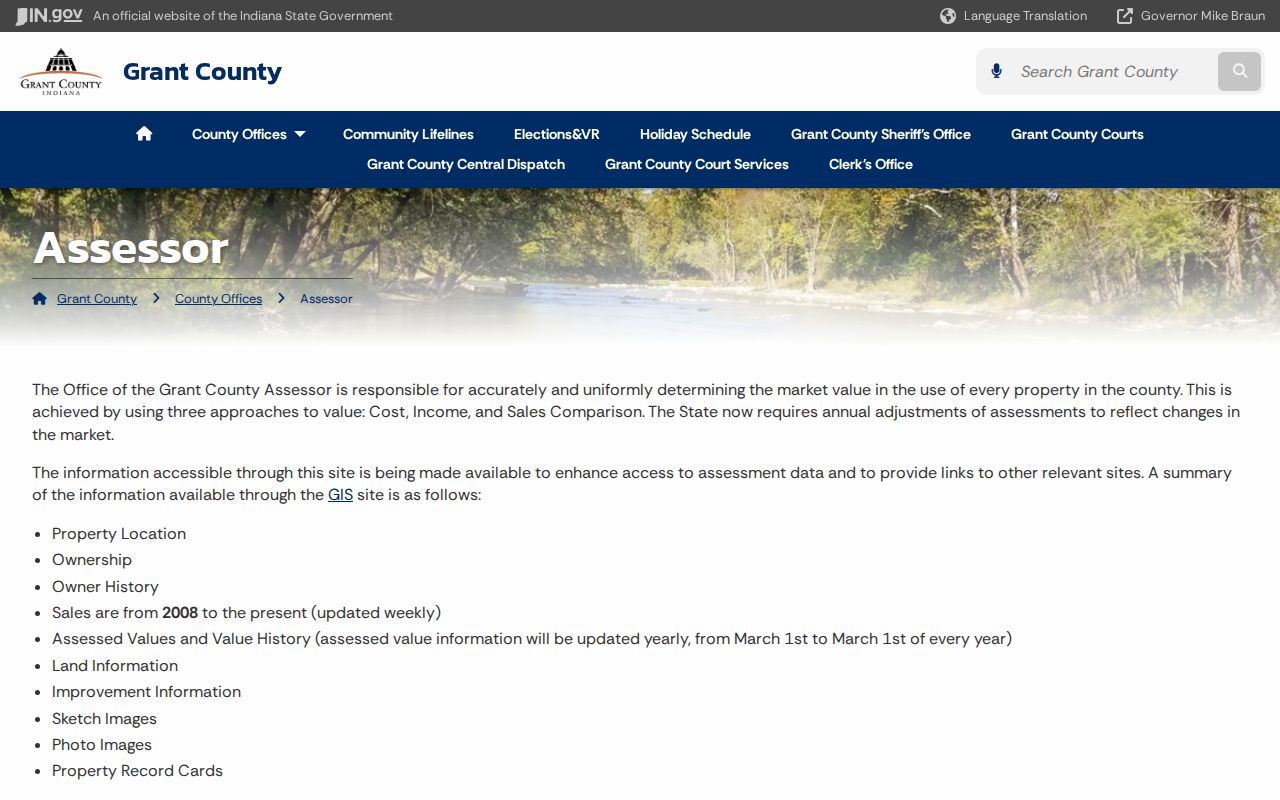
The county page also documents update rhythms. Sales from 2008 forward refresh weekly, while values and value history change annually from March 1 to March 1. Neither schedule promises when the ownership line moves.
Trace the Grant County Owner to the Latest Deed
Once the parcel and roll name are in hand, turn to Fidlar Tapestry. Search the name as grantee. Narrow the results by recording date, parcel number, subdivision, lot, block, or a metes-and-bounds clue. Open the newest plausible instrument. Every Tapestry search carries a charge, so a parcel number and tight date range spare you costly broad attempts.
The deed's grantee receives the recorded interest. Match its legal description to the parcel. A same-name hit elsewhere in Grant County proves nothing. Tapestry lets you view images without an added image charge after the paid search, though printing costs extra. For certified proof, request the instrument from the Grant County Recorder.
- Owner of record
- The owner named in the current public roll or controlling recorded chain as of a stated date.
- Grantee
- The person or entity receiving an interest in a recorded deed.
- Title
- The legal ownership interest, which a simple online name result does not conclusively establish.
- Situs address
- The physical property location, distinct from an owner's or taxpayer's mailing address.
Deed records settle most ownership questions here. Note: A recorded instrument is evidence of a transfer, but an online lookup is not a title examination or legal opinion.
A New Grant County Deed May Beat the Roll
A just-closed sale breeds temporary disagreement. The Assessor and Recorder can lag each other because Grant County publishes no fixed span between recording and the Ownership update. The newest deed is therefore the stronger transfer evidence, provided its grantee and legal description match the parcel in question.
Record an as-of date. Preserve the GIS result, the APN, the Tapestry index line, and the instrument image. The trail can be reconstructed later. If the stakes are legal or financial, obtain a certified copy and appropriate professional review. The separate current-owner page tracks the present roll card. This method answers who owns the property.
Do Not Confuse a Grant County Taxpayer with the Owner
The Treasurer's Tax List exposes Dist#, Property/Parcel #, Name, Tax Year, and Property Address, and it is the best tool for joining the 18-digit APN to the 10-digit tax number. Its name column is not proof of title. The county itself warns that Property Address can mark where the statement is mailed. A former owner's address may linger in old tax history.
Use the current year whenever tax status matters. Earlier pages are historical. Partial names help with variants like Bill, William, Wm, McCoy, Mc Coy, or an apostrophe form, but they also breed false matches. Resolve every hit to the subject APN. Only then carry the name forward.
When a Grant County Property Owner Is an Entity
A Grant County deed can vest property in an LLC, corporation, trust, estate, or multiple joint grantees. Copy the recorded name exactly. For an LLC or corporation, the Indiana business search confirms entity name, type, city, status, incorporation details, and registered-agent information. A registered agent accepts papers for the entity. The agent is not the owner.
Trusts and estates take a different path in the Recorder's deed records, which may show a trustee's deed, a personal representative's deed, or a later conveyance. Grant Clerk and MyCase can supply permitted probate or trust orders when they explain the transfer. Do not infer ownership from a pending docket. Skip protected details the parcel question does not need.
Grant County Court Cases Change the Owner Trail
Litigation can break a tidy assessor-to-deed trail. Foreclosure, quiet title, probate, partition, tax-sale challenges, and mechanics-lien suits can all change the owner of record in Grant County. The docket sits in Indiana MyCase, searchable by party or case number. When you need official proof, get the final order or judgment from the Grant County Clerk. Older, sealed, or confidential material may not appear online.
A docket entry alone does not record the transfer. Search Grant County deed records for the instrument that does, whether a sheriff's deed, commissioner's deed, personal representative's deed, judgment, or release tying the case outcome to the parcel. Match dates, parties, and legal descriptions. The two records should agree.
Note: A pending complaint shows a claim only; the final court order with its recorded instrument settles ownership.
Preserve a Grant County Owner Evidence Packet
A stubborn parcel is easier to explain when each clue keeps its source and date. Save the Elevate image showing the APN. Add the Tax List row with both numeric keys. Archive the latest Tapestry index and deed image. A permit or final MyCase order earns a spot only when it bears on the same land, as does any Auditor split, plat, or combination record.
| Packet item | Question it answers | Cross-check |
|---|---|---|
| GIS parcel and card | Which physical parcel is involved? | Property Location and legal description |
| Latest recorded deed | Who received the recorded interest? | Grantee, date, instrument, and land description |
| Tax account | Which current bill belongs to the parcel? | 18-digit APN and 10-digit account |
| As-of note | When was each portal checked? | Screenshot date and direct source URL |
This packet cannot turn a public property records review into a title search. It does lay out the reasoning behind a Grant County ownership answer, and it keeps a stale screen shot from standing in as current fact.
Limits on a Grant County Ownership Answer
A public owner of record tells you one thing: whose name the deed records carry. It does not prove who lives in the house. It does not reveal who manages the building. It does not show who holds the land. Unrecorded claims may also sit against the title. Mailing addresses and situs addresses can differ. A tax bill mailed out of state may still concern property inside Grant County.
Ownership lines have lawful gaps, too. A trust or a business entity can keep an individual's name off Grant County property records altogether. Indiana's Safe at Home program also shields qualifying survivor addresses from disclosure.
Use records lawfully. Grant County owner information supports purchase, boundary, estate, and civic research; never use it to stalk, harass, threaten, or target a person.
Indiana APRA gives you the right to request existing public records. It does not force an office to build an ownership analysis for you. Ask the right custodian for a narrow record instead. This could be one deed or one parcel entry. Redact personal data you do not need before publishing any image. Ownership may need to stand on solid legal ground. In that case, rely on a qualified title professional rather than the property records alone.